Wednesday, May 24, 2006

No Free Lunch at Microsoft

Yesterday as I was coming out of the local branch of the Tucson Public Library I was approached by a person gathering signatures for petitions and asked if I would sign them. All of them dealt with issues that various special interest groups want to have included on the November ballot. Since none of them were issues that I am in favor of seeing enacted into law, I declined to sign them.

One caught my eye and that dealt with an issue that certain groups in Tucson have been pushing unsuccessfully for quite a while and that is raising the minimum wage in Tucson. From a strictly selfish point of view, I probably should have signed that petition. Like anyone with any knowledge at all of economics and how an economy works, I know that raising the minimum wage has the effect of reducing the labor force as employers layoff marginal workers whose output is less than the new wage. To replace the lost output, these employers have to turn to more automation and this increases the demand for people, like me, with the skills needed to design and run these new systems.

However, in addition to not feeling right about advancing on the misfortune of others, I am the father of four children, three of whom are just entering the labor force. My oldest, started part-time work at minimum wage when he turned 16. In the six years that followed, and with no more than a high school education (his choice, not mine), he has advanced to over $13.00 per hour – almost twice what those in favor of increasing the minimum wage are proposing.

Just as the Ritenour article which was the reading assigned with Assignment 1 for my ECN 202 class this spring) described, when my oldest son was earning minimum wage he lived at home with all of his basic living expenses (including medical insurance) taken care of by me. His income went toward his car, electronic gadgets and partying. After completing high school and working his way up to $13+ per hour he elected to move out and began supporting himself.

My three younger ones, who are still in high school and college, are working part-time at minimum wage jobs. However, their food, shelter, medical expenses (including insurance) and education expenses are covered by my wife and I. In an effort to induce a little reality I have started charging them $30 each (when they are working), but, instead of using it to defray the expense of supporting them, I have opened IRAs (Individual Retirement Accounts) for each of them and deposit their $30 into these accounts.

While my children tend to be the norm for people earning minimum wage, I realize that there are some people who have to support themselves and, in some cases a family, on minimum wage. However, I have yet to see how they are helped by a law that results in the loss of their job. I don’t see how a person struggling to support themselves on a minimum wage are made any better off by reducing that wage to zero.

The expression there is no such thing as a free lunch is more than just a quaint saying. It contains a profound economic truth and that is that nothing is free. If the college decides to provide free meals in the cafeteria as a benefit to instructors the meals would cost the instructors nothing and, from their point of view, would be free. But someone would have to pay and the net result would be that either the taxpayers would have to pay through higher taxes, or the students would have to pay through either higher tuition and/or higher prices for meals in the cafeteria.

Today’s issue of Redmondmag.com provided a very clear example of the no free lunch concept. It seems that two years ago financial and competitive pressures forced Microsoft to eliminate free sodas, free massages at work and other employee perks common in high tech companies during the dot com era. Now, in order to keep the highly skilled workforce needed to compete against the likes of Google, Microsoft is being forced to reinstate many of these perks. This move is an investment by Microsoft which they hope will pay off with higher sales in the future. But, like all investment, the money has to come from current consumption which means that some group has to receive less in order for the Microsoft employees to receive more. For the current fiscal year (which, for Microsoft, ends on June 30th) the new perks just given to Microsoft’s full-time, regular employees will be paid for by Microsoft’s large body of contract or temporary workers in the form of an involuntary and unpaid seven day leave of absence (i.e., a seven day layoff). Microsoft apparently chose to place the burden on this group rather than making its stockholders (a group that includes multi-billionaire Bill Gates as well as mutual fund companies managing retirement accounts for minimum wage workers like my three youngest children).

While idealists can argue forever about how best to distribute the burden of a transfer of income or wealth from one person or group to another, the fact remains that, except for increases in productivity (which actually increase the size of the economic pie thereby making more available for everyone), there is no way to make one person or group better off economically without making some other person or group worse off. As Milton Friedman kept emphasizing to his students and TV audience

THERE IS NO SUCH THING AS A FREE LUNCH!

Friday, March 03, 2006

Voluntary Transactions in a Free Market

When we speak of market transactions as being voluntary in a free market we are saying that the use, or threatened use, of physical force is not being applied to either of the two participants in the transaction in order to make them enter into that transaction. Unfortunate or unpleasant circumstances may leave a person with little or no choice as to whether or not to enter into the transaction but this is not the same as one of the participants or his/her agents threatening force to complete the transaction.

For instance, going to the dentist to have a cavity in one of my teeth filled is not something that I look forward to having done and it is certainly not something for which I enjoy spending my money. In fact I take steps to try to prevent cavities so as not to have to enter into such transactions. When I do get a cavity I have the choice of either paying to have it treated or living with the pain and knowledge that I will eventually lose the tooth or worse. So I go to the dentist and part with my money knowing that paying for the treatment is the better of two unpleasant and unwanted choices. Even though I view my choice as being the lesser of two evils I still freely choose to pay to have the cavity filled.

This is different from the dentist deciding that, because cavities are not healthy, people must be made to have them filled. To do this the dentist forces his/her patients at gunpoint to come in and pay to have their cavities treated. Whether the dentist personally confronts the patients or has an agent do the threatening, the use, or threat, of force by the other party to the transaction means that this is no longer a voluntary decision on the part of the other party to the transaction. The same would be true if the dentist, rather than personally threatening the patients or hiring others to do the threatening got the government to make it illegal for people not to have their cavities treated and used the police to force people obtain treatment. (While it may seem like a no brainer to have one's cavities treated, a person could choose to live with the discomfort of a bad tooth if treating the tooth meant using money that was needed for something more important to them such as to purchase life saving medication for a loved one.)

The above example would be the same if it was the patient that threatened or used force against the dentist to fill a cavity at a price lower than what the dentist wanted to charge. Getting laws passed to limit what a dentist could charge to fill a cavity (and enforcing it with fines or prison if they insisted on charging a higher fee) would also be an example of force to make one party in the transaction participate unwillingly.

Circumstances are not always good and many economic decisions are made on the basis of choosing the lesser of two undesirable choices. But so long as we are free of man-made force and allowed to make the choice on the basis of the environmental obstacles alone, the choice is voluntary.

Thursday, March 02, 2006

What Will Happen when the Boomer Generation Retires?

After doing the assignment and take home test for section two of the telecourse, which dealt with the Philips Curve and Inflation, a student asked if the coming retirement of the Boomer generation (of which I am a member) would be inflationary.

The simple answer to this is yes, as the removal of such a large section of the population from the workforce would result in a noticeable reduction in the labor force and decline in production of goods and services. Further, with their income from Social Security, pensions, 401(k) plans and IRAs, this large group, who would not be producing, would still be exerting significant demand for goods and services. The same amount of money chasing a reduced amount of goods and services would be inflationary as prices rose in response to people bidding up the prices of the shrinking supply of goods and services.

Having said that, do I think that this will happen? My answer to this is no. There are four reasons why I don't think that, other things being equal, the pending retirement of the Boomer generation will be inflationary.

The first reason is the fact that, based upon both the past actions of this generation and present indications, a large number of these people will not be retiring. Many of the members of the Boomer generation do not have sufficient savings to be able to afford retirement. A number of these absolutely cannot afford to retire and others cannot afford to retire and maintain the life styles they are accustomed to living. Many others, including me, have indicated that they have no interest in stopping working. These people do not want to leave an active life of productive work and spend the rest of their days in idle leisure. Not only is the prospect of doing noting not attractive to these people, but both scientific studies and our own observations of our parents' and grandparents' as they aged have shown that people who remain active and productive tend to be healthier and live longer than those who simply stop working all together. Anyone who doubts this should take a trip down to Green Valley during the winter to visit the Green Valley Computer Club. This is a large active group of older people who volunteer as much as 40 or more hours per week running a computer training operation that rivals anything that Pima Community College offers in this area. I was invited to address this group a few years ago and was impressed by what this group, most of whom appeared to be in their late sixties or early seventies was doing. I was dumbfounded when I learned that most of the leaders who were showing me around were really in their late eighties and early nineties!

The second reason I feel that the pending retirement of the Boomer generation will not be inflationary is the global economy. While nations with advanced (in terms of economic development) economies - the U.S., Canada, Australia, Western Europe and Japan - have aging populations, the populations of the emerging economies of Asia, Latin America, the Middle East and Africa are disproportionately young.

Outsourcing, or the shifting of work from one nation to another, is already an established practice for other reasons. The gaps in the workforce caused by the retirement of large numbers of people in countries like the U.S. can be offset by shifting the work to places like Asia or Latin America who have the population to do the work. Americans have the money to purchase the goods and these countries have the workers to produce the goods.

The third reason for being confident that the possible exit of large numbers of workers from income producing work in the U.S. due to retirement will not be inflationary is immigration. Again, aging populations in the U.S. and other economically advanced nations is offset by disproportionate numbers of younger workers in the developing nations. Immigrants are not just poor peasants from Mexico or Central America coming here to take low wage jobs that require few skills. Instead, they include people at all levels. Rupert Murdoch, the owner of the Fox media empire is an immigrant. Last week's Wall Street Journal had an article about how as President Bush was finding an ally in the new Prime Minister of India, a leading critic of the President was the daughter of that same Prime Minister. However, she was not a foreign critic of the President but rather the leader of an American Civil Liberties Union (ACLU) team fighting the Bush Administration in court over their handling of prisoners in Guantanamo. Her father may be the Prime Minister of India, but she is a Yale educated lawyer, member of the American Bar, living and working in the U.S. and married to an American citizen (the article did not indicate whether she was a citizen or simply a legal resident). The fact is, the U.S. is a relatively open nation which offers great opportunity and this attracts people from all over the world. The U.S. has always been a nation with a shortage of labor and from the early days when we were still just a string of British colonies along the Atlantic coast we have relied on immigration to provide the labor need to build the country.

Finally, we have capital and technology. Capital is expensive and, other things being equal, it is less expensive to use labor rather than capital. But when labor is in short supply (as it has been throughout most of America's history) business is forced to invest in capital. Critics constantly bemoan the decline of the manufacturing sector in the U.S. But we are still a major producer of manufactured goods and our output of these goods is increasing rather than decreasing. Manufacturing is as large as ever in the U.S., it is just that: 1) other sectors are growing as well so the proportion of the economy devoted to manufacturing is declining; and, 2) due to automation, the number of jobs in manufacturing are declining. Today, production processes that used to employ dozens now employ a half a dozen or less aided by robots and other automated equipment. The exit of the Boomers, if it occurs, will be further incentive to invest more in capital and technology to make up for their loss.

Contrary to Luddite mythology, automation and advancing technology creates rather than destroys jobs. Ceteris paribus, automation enables business to continue to expand without having to increase labor proportionately. The main reason why business invests in more capital rather than labor is that the needed labor is not available. When the labor needed is already fully employed the only way for one company to expand is to bid workers away from another company – this results in an upward spiral in labor costs, which is inflationary, without a corresponding increase in output. Increased capital investment solves this problem in two ways: 1) it makes each existing worker more productive by allowing them to produce more in the same amount of time with the same or less effort; and, 2) it increases the pool of labor by enabling people who lack the physical and/or intellectual capabilities to do the job under the previous conditions to now do the job. For example, think of physical labor such as road building. If done with a pick and shovel the work is not only slow but the jobs can only be done by people who are physically strong. Bring in motorized earth moving equipment and not only can one worker now move as much dirt as a dozen or more using picks and shovels, but the person driving a piece of heavy equipment does not have to meet the same demanding physical standards, thus allowing employers a larger pool from which to hire. Early in my banking career I designed an automated system for doing the paperwork needed to process mortgage loans. Prior to the computer system this job required excellent typing skills as well as years of experience in order to know which documents to prepare for a given loan and how to prepare them. Increasing demands for home mortgage loans and increased complexity due to new government regulations put great pressure on the industry to expand but the cost of recruiting experienced labor from our competitors was prohibitive. With the system I designed it took about the same amount of time to produce a loan package. However, instead of 40 to 60 words per minute typing skills I could use people who typed at 18 to20 wpm. Instead of some post secondary education and ten years or so of experience, the new system allowed us to hire people right out of high school, train and have them producing mortgage loan packages within two weeks. We were thus able to increase our loans without driving up our wage costs.

It should be noted that most Boomers put off having children until they were in their late thirties or early forties. By deferring the start of their families for about twenty years we, in effect skipped a generation (it takes about 20 years for a new generation to reach adulthood). The so called baby bust refers to the roughly twenty year period when most of the boomer generation were not having children which resulted in the generation that immediately followed us being very small. Our own children are now reaching adulthood just as we are getting ready to retire. This generation is as large as the Boomer generation but, since it is just coming of age and beginning to enter the labor market, it has not had time to acquire the skills and experience needed to enable it to replace us in the workforce. However, technology could make up for much of the experience and skills that our children lack thereby enabling them to replace, to some extent, the retiring Boomers.

All of the above factors will come into play as individuals and individual businesses adjust to changing conditions. I am confident that, if left to itself, the market will adjust and the transition will be relatively smooth. The chattering classes, of course, will be devoting ever increasing amounts of time to worrying about this perceived problem over the coming years. However, anyone who feels the temptation to succumb to their doom and gloom predictions, should go to their local library or the internet and search out magazine and newspaper articles from the 1930s dealing with the perceived demographic crises of those years. Due to the Depression and other factors, the birthrate had dropped noticeably giving rise to fears that there would be too few people in coming years to do the work necessary to keep society going. That generation went on to push the economy to new highs and, at the same time, produce the Boomer generation.

Wednesday, February 22, 2006

Price Discrimination

In yesterday's blog entry I stated that the hotels and museums in Russia were practicing price discrimination when they charged foreign tourists different rates than local Russian tourists. This is not the same as racial or other types of discrimination whereby people are denied rights due to their race or some other identifying characteristic. Instead, it describes a situation where seller's can take advantage of the fact that not only are certain groups of consumers willing to pay more for a good or service than another but it is possible to charge each group what it is willing to pay AND prevent the higher paying group from paying the lower prices offered to the other group.

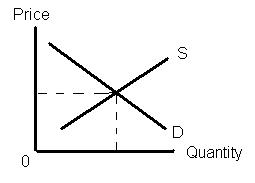
All of you should understand that the price of a good or service in the market by the intersection of the demand and supply curves. However, there are some people who fall along the portion of the demand curve that is above the equilibrium point. These people are willing and able to pay a higher price for the good or service but, seeing they can get it for the lower market equilibrium price, end up paying the equilibrium price. The difference between the price an individual is willing to pay and the equilibrium price that that individual actually pays is known as consumer surplus. Now, if I, as a consumer, drive into a gas station with my tank on empty and am willing and able to pay $2.90 per gallon but see that the gas is offered for $2.30 I am not going to insist that the attendant accept $2.90 per gallon for the gas I purchase. In fact, I will be angry if the attendant, somehow knowing that I am willing to pay $2.90, attempts to charge me that price after charging the customer ahead of me $2.30 for the same grade of gasoline. Given the opportunity, the consumer will always elect to pay a lower rather than a higher price, ceteris paribus, even though he is willing and able to pay the higher price.

The opportunity for price discrimination arises when a seller is able to first identify two or more different segments of consumers with each segment having a different price they are willing to pay. Second, the seller must have some control over price. Monopoly, monopolist competition and oligopoly all allow sellers to exercise some control over the price they charge as the products these sellers offer are to some degree unique. Price discrimination is not possible under pure competition since the good or service offered by each seller is identical to that of all other sellers of the good or service enabling consumers to get the lower price simply by going to a competing seller. Finally, and most importantly, it must be impossible or too costly for a buyer to purchase the good or service at the lower price and resell it to buyers in the higher price category at a price between what she paid and what the seller is charging that group. If such arbitrage opportunities exist any price discrimination will soon disappear.

The conditions described above existed in the hotel and museum industry in Russia and that is how they were able to practice price discrimination. Another example of price discrimination closer to home is the sale of seats on airplanes. Think of two passengers sitting next to each other in tourist class on a flight from Tucson to Chicago. One passenger paid $1,200 and the other paid $300 for the same service. How is the airline able to get away with this? Well, the first passenger is a businesswoman whose employer paid the $1,200 to get her to Chicago to close a multi-million dollar deal while the second passenger is a retired grandfather on a budget who had to purchase his own ticket. Being retired, the grandfather's time is flexible so he was able to purchase a ticket twenty-one or more days before and able to schedule his departure and return such that he will be spending a Saturday night in Chicago. The businesswoman's employer would have liked to pay $300 for her ticket but when the client called the day before and said they were ready to sign they had to send her immediately – they were not about to lose a multi-million dollar deal by trying to save $900. Further, they are probably paying this woman a high salary and cannot afford to have her sitting around Chicago after the deal waiting until Sunday morning in order to qualify for the $900 savings. Business needs to respond quickly and usually does not have the luxury of 21 day advance reservations. Also, it is usually less expensive to pay the extra cost of the tickets than lose the employee's services for a few days (to say nothing of the fact that the employees prefer to be home with their families on weekends rather than sitting alone in a hotel room in a distant city). Tourists have the luxury of planning ahead and don't mind spending Saturday at their destination but they are also more price sensitive to price. The 21 day advance reservation and Saturday night layover requirements are effective ways to segregate the two groups of consumers. There is also no easy or inexpensive way for tourists to purchase extra tickets and make a profit selling them to business so the price discrimination works in this case.

The Anderson book also gives the example of monopolies charging more for the first unit of the good or service than for succeeding units. This works when the majority of the consumers have a compelling need for first unit of the good or service but not for additional units. Electricity is a good example here. It is almost impossible for a modern home to be without electricity. A certain minimal amount is needed each month for lights, alarm clocks, cooking, heating (or starting the heating unit if it is not electric) and, in Arizona in the summer, cooling. But after the basic electrical needs are met other uses are nice but not a necessary. It is necessary to use the air conditioner in summer to cool the house down while we are in it. It is nice, but not as necessary, to keep the house cool all day so you can walk into a cool home after work and not have to wait for it to cool down. Similarly, a twenty minute hot shower on a cold winter morning is great but two are three minutes are all that is necessary to clean yourself. Thus, people will purchase the first necessary units but are reluctant to spend the same amount for additional units. Recognizing this, the monopolist offers the additional units at lower prices to induce individuals to keep consuming past the first required purchase. (NOTE: this second example is also a good example of diminishing marginal utility where the satisfaction gained from consumption of the good or service declines with each additional unit consumed. In this case in order to keep the cost of the satisfaction or utility the same for each unit purchased, the price paid for each additional unit must be reduced proportionally.)

Monday, February 20, 2006

How a Free Market Works

In both the ECN 201 Microeconomics class and the ECN 200 Basic Economic Principles courses I assigned the same article by Murray Rothbard entitled What is the Free Market? and one of the questions asked in both courses was:

Explain why the socialist planners in the former Soviet Union were unable to take a bumper (i.e., very large) harvest of wheat and convert it to bread and other baked goods for consumption by consumers in cities throughout the former Soviet Union.


To date the few assignments I have received have all paraphrased Rothbard to the effect that the Soviet planners lacked a free market and prices to guide them. Some have also added that the absence of prices and profits also resulted in a lack of incentives to produce. While I have accepted these answers so far, it is clear that those answering the question didn’t really grasp why the free market and price system is important and how they work.

A real life story from my wife’s experience may help clarify the problem. My new wife is from Ryazan, a city in western Russia with about the same size population as Tucson. Ryazan is located about three hours by train or car south of Moscow. According to my wife, there were no stores with food for sale in the city in the period prior to the fall of communism in the early 1990s. Despite the fact that among the city’s industries was a large meat processing plant (the total output of which was sent to Moscow for sale) people had to travel by car (if they had one) or by train to Moscow to do their grocery shopping. My wife and her former husband had to travel by car with his parents (who owned the car) once a month to do their grocery shopping. The trip took three hours each way to get to Moscow and back and the rest of the day was spent in lines in stores trying to get food. Back in Ryazan they had a small apartment (for themselves and their two children) with a small kitchen and a refrigerator about half the size of contemporary American refrigerators.

I had previously visited Moscow and St. Petersburg (then known as Leningrad) in my senior year of college 1969 as a part of a Russian history course that included a 2 week field trip to the Soviet Union. I observed that life was drab but the people I saw and met had sufficient food, clothing and shelter. There was not much variety in the food – mostly fresh potatoes and vegetables. Meat was very scarce and people’s main source of animal fat for energy was the lard that food was frequently used for cooking. Obtaining food required going from store to store and standing in long lines hoping they still had food in stock when you reached the counter. The clothing was dull and ill fitting. The colors were mostly dark blues, grays, browns and blacks and even these dark colors were dull compared to the same colors in clothes manufactured in the west. The quality of western clothing was so superior that a westerner could not walk down a street without having a dozen or more people approach them with offers to purchase the extra clothes they had back at the hotel. The ruble prices offered for the used clothing were usually in excess of the original price paid in the west. This despite the fact that the buying or selling of items outside regular stores was illegal. The housing was mostly small apartments.
This was the situation in Russia for most of its citizens under communist rule. Practically everyone was poor by western standards but it was not the absolute poverty of the third world. Things were bad but not desperate.

In a market economy prices for food in a city, like Ryazan, would be high. This would signal producers that there was an opportunity for profit and they would begin moving food to Ryazan to sell. But, without a market driven price system, this signal did not exist so the city’s plight did not come to the attention of the planners in Moscow. The other, non-market, signal that would have alerted the planners would have been large numbers of people dieing of starvation or masses of hungry people taking to the streets and rioting. But, there was no shortage of food in the sense that people were going hungry. Food was not plentiful and it was inconvenient to obtain it but, with effort, sufficient food could be obtained. Like a person with a long illness who has learned to live with his or her pain, the people of the former Soviet Union endured. Thus, in the absence of signals, the planners, occupied with trying to make all the economic decisions for a nation that stretched from the Baltic to the Pacific, easily overlooked Ryazan.

As my first described it to me when I first visited her in Ryazan in 2002, “…there was a fellow named Gorbachev in charge and things got really bad. Then one day things suddenly changed. Gorbachev was gone and food appeared in the stores in Ryazan”. The change was literally overnight as Russia went from communist central planning to a free market. The first thing that changed was money became important. Under the communists prices were set by the planners with some attempt to ration scarce goods. But, both the lack of good information and political meddling made most prices meaningless and rationing was done by having people wait in long lines or use political influence to obtain needed goods. Further, incomes did not vary much so everyone tended to suffer equally. Acquiring money through saving was not allowed. The government owned all the businesses so there was no place to invest one’s money. Starting one’s own business was illegal. Finally, it was illegal to take money abroad, but that didn’t matter because, the currency was basically worthless outside of the Soviet Union.

With the communists no longer in control entrepreneurs were free to begin making money by providing products to consumers. Farmers dug into their limited supplies of food that they had hidden for emergencies and began selling it in the cities. Making a profit, they returned home and began growing and scrounging anything edible to take to the cites to sell. Others, not in farming began noticing arbitrage opportunities where food in large cities, like Moscow, was more plentiful and therefore less expensive while in places like Ryazan it was scarce and expensive. They went to the places with less expensive food, purchased it and returned home to sell it at a profit. (The fall of communism meant that people were no longer paid when they took off from work, it also meant that gasoline prices were allowed to rise and trains, which were still run by the state but needed money to keep operating, were now making everyone pay the regular fare. In the past paying was more of an honor system which most people chose not to honor.) It was thus profitable for people out of work to specialize in traveling long distances to obtain food and other goods for re-sale in their home cities but costly for people with jobs. In a market system goods that are in great demand and short supply command high prices while those which are in large supply and/or not in great demand have lower prices. While planners had to try to figure everything out in order to make the economy run (and when they did not know everything, which was all the time, goods became scarce), entrepreneurs in a market economy don’t have to know everything. They just have to be able to identify which goods command a high price and can be produced or obtained at a lower price somewhere else.

The Russia I visited in 2002 was vastly different from the Soviet Union of 1969. Food was plentiful and in greater variety. Clothing was also plentiful and of comparable quality to western clothing. In 1969 you could literally spot a foreign tourist a mile away by their clothing. In 2002 the only way to identify a western tourist was if they spoke in a language other than Russian or, in the case of Americans, if they wore a wedding band on their left hand (Europeans generally wear wedding bands on their right hands). I even took a three day bus tour with my then fiancée using a Russian name and not speaking (I don’t speak Russian) and easily passed myself off as one of the locals.

Prior to the fall of communism people, including economists, were wondering if it was possible to convert from the communist economic model to a market economy peacefully given the huge distortions created by the communist central planning. In the 1999 book The Commanding Heights. The Battle Between Government and the Marketplace that is Remaking the Modern World. authors Daniel Yergin and. Joseph Stanislaw describe the situation in Poland when the communist economy collapsed. The communist generals who had staged a coup earlier and replaced the civilian communist rulers in a last ditch attempt to save the system gave up and turned the government over to Solidarity. American economists, trained in free market economics under the tutelage of Milton Friedman and the University of Chicago, and fresh from their success in turning the Chilean economy around after its short bout of communism under Salvador Allende were called in to perform the same miracle in Poland. But Poland was a complete disaster. With food supplies expected to run out in the cities in a matter of days and mass starvation imminent, the American advisors advised going cold turkey by instantly abolishing all forms of government control over the economy and letting it move to a free market instantly rather than the gradual transition the many were urging. The government declared that effective at midnight a couple of days later the transition would occur. The American economists crossed their fingers and made reservations to leave on the first plan out after midnight just in case the experiment didn’t work and chaos ensued. The transition to a market economy took place at midnight as planned and by 5 a.m. there were lines of farmers making their way to the cities with food. Within days the food shortage had ended.

Seeing Ryazan in 2002 I could easily believe my then fiancée when she described the change as no food one day and food suddenly appearing within days of the unreported (in Russia) coup that moved the country from communist central planning to a market economy literally over night.

Monday, February 13, 2006

Brown Lung Disease
Discussed in Lesson 1 of ECN 200

Brown Lung Disease, also called Byssinosis, is a lung disease that results from prolonged (often ten years or more) exposure to breathing of cotton fibers present in the air during the production of cloth from raw cotton (in the U.S. most textile mills process cotton fiber so the most common cause of Byssinosis in the U.S. is cotton fiber, in other countries it is caused by flax, hemp or other material fibers as well as cotton).

It is believed that byssinosis is the result of constant irritation and/or release of toxic substances by the fiber on the lungs over a long period of time. Byssinosis is characterized by shortness of breath, feelings of tightness in the chest and constant coughing. Continued exposure after onset of disease results in a reduced ability to breathe, especially exhale, which is very similar to the symptoms experienced by people with chronic bronchitis. There is some indication that smoking or occurrence of other lung ailments aggravates byssinosis. While "brown lung" is the term used to describe the condition, patients' lungs do not turn brown as a result of the disease.

According to the video and statistics cited by OSHA at the time of the implementation of safety standards to prevent the disease in 1978, about 100,000 or about 20% of the workers in textile mills in the U.S. were AT RISK of contracting the disease. After implementation of the new rules, OSHA statistics showed that between 1979 and 1996 an estimated 35,000 current and former textile workers (due to long period needed to develop the disease, most of these probably contracted the disease in the years prior to the implementation of the safety standards) actually had the disease and, of these, between 120 and 188 died from it in the period 1979-1996.

While it was unfortunate that some workers contracted the disease and a few died of byssinosis, the cost of the cure according to your book was the loss of 300,000 jobs in the textile industry in the U.S. Additional jobs were probably lost in service industries that provided goods and services to the workers (stores, restaurants, bars, banks, etc. all of which would have seen business decline and would have laid off workers due to loss of business from the unemployed textile workers) and services to the companies themselves (delivery people, suppliers of raw materials, machinery, etc.). In many cases the impact of the closing of textile factories could be tremendous in cases where the textile company was the major employer in the area. Also, for many of the workers jobs in the textile mills were probably both one of the few jobs for which they had skills and the textile jobs probably paid more than the few other low skill jobs.

Why was the actual rate of disease and death so low? There are a number of possible reasons. First, the disease generally occurs only after long exposure to breathing the cotton fibers. Many people got a start in the textile mills and then moved on to work in another industry. Second, many of those who spent their careers in the textile mills only spent part of their career or part of their working time in those parts of the factory floor where the fibers were concentrated. Finally, contracting the disease and the severity of it once contracted can be related to one's overall health. People with weak lungs are probably at greater risk than those with healthy lungs. Secondly, smoking and other activities that harm or weaken the lungs will increase the risk of byssinosis and this risk will be even greater in people whose lungs are weak to begin with.

While we cannot dismiss the deaths of 188 or so workers or the debilitating illness of 35,000 workers as an acceptable cost for the saving of over 300,000 jobs. But, at the same time, it is difficult to justify drastic actions that severely harm many to save a few especially when there are other alternatives. As your text and video pointed out, in the case of byssinosis, a mask that cost $1.49 per worker would have been a low cost interim solution. True, the masks were uncomfortable but that was better than losing one's job in a job market with few other possibilities. As companies renovated factories and built new ones they would have installed the new equipment in an effort to keep their existing labor force and attract new workers from the firms that had older factories. But incorporating new technology into the building of a new factory is considerably less expensive than attempting to retrofit new equipment into an existing structure.

The study of economics should show you that there is no such thing as a free lunch. Everything has costs and all economic activity involves tradeoffs between costs and benefits. The goal should be to find production processes that yield the most benefits with the least cost. But more importantly, activists and policy makers should consider the implications of the policies they are pushing. The workers in the textile mills were free to choose between keeping their jobs and risking the possibility of contracting byssinosis or seeking a different job. While their options may have been limited, they were still in the best position to analyze their personal situation and make a decision. Instead, union officials, Congressmen, bureaucrats, Supreme Court Justices, etc. in Washington and other places far from the textile mills and with jobs that would be unaffected by their decisions, made the decisions that cost over 300,000 textile workers their jobs.

For more information on lung diseases and occupational dangers affecting lung health see the
American Lung Association web page.

Thursday, February 09, 2006

Videos for ECN 200 Telecourse

All students in the ECN 200 Telecourse should have received a Telecourse broadcast scheedule with the syllabus that was mailed to you by the Community Campus. In there it shows the ECN 200 course videos being broadcast on Comcast Channel 96 on Wednesdays from 6 - 8 pm and on Cox Channel 96 at the same time (Wednesdays from 6 - 8). It is very important that you make a point to watch these broadcasts as these constitute the lectures that you would be attending if this were a regular classroom class. If you schedule does not permit viewing at this time here are your additional options:

1 Set the timmer on your VCR and record the program for later viewing.

2 Go to the LRC desk at the Community Campus (located at 401 N. Bonita Ave.) and check out the three tapes that contain the entire series. This will require a Pima Community College ID card (which can be purchased at this or any PCC campus for about $2 upon showing proof of registration). You will be required to return the tapes at the end of the semester in the same condition as when checked out or a fine will be levied and a hold placed upon your records.

3 You can go to the Library at any PCC campus and check out a video FOR VIEWING AT THE LIBRARY.

4 Go to www.learner.org on the internet and view the videos on your PC over the Internet. See below for more on viewing the videos over the Internet.

A student in last Fall's class discovered the Learner.Org site which contains numerous resources for students and teachers. The best way to access the videos used for the ECN 200 course is to click on the blue Telecourses button along the top of the page and then scroll down to the Economics U$A link. Each of the videos is listed and can be viewed by clicking the video button next to the one you wish to view.

This site does require you to register in order to view a video. But it is a one time free registration. I did a quick check of it and they are the same videos that are broadcast for the class. The only limitation is that, being video, you need broadband access for good viewing. If you have a dial-up connection, as I have, it is slow and difficult. If you do not have broadband at home I suggest that you go to any PCC computer lab or library to view them or visit a Tucson Pima Public library and use their computers (U of A students can also use U of A facilities).

Those of you in my ECN 201 and ECN 202 independent study courses may also want to check out this site as the videos are an excellent resource and do a very good job of presenting the material in an interesting and understandable manner.

Wednesday, February 08, 2006

Opportunity Cost Explained

Usually when we think about the term costs we think of money. However, in economics we use the word opportunity costs to consider costs in a larger sense.

Normally when we purchase something we give up money in exchange for a good or service we want. But the true cost, or opportunity cost, is usually more than this. If my wife and I decide to go to a movie and pay $20 for tickets we are giving up not only something else that we could purchase with the $20 but also something else that we could have done with the time spent in the theater viewing the movie. It is the other thing that we could have brought with the money as well as the other thing that we could have done with the time that is the true, or opportunity cost. Everything we do involves a choice and when we make a choice the cost of that choice is the other things we could have had or done if we had not made this particular choice.

Now, as rational economic beings we choose that which will give us the greatest satisfaction at that particular moment. The opportunity cost of a particular choice is the next best alternative that you would have chosen. This is the thing you give up in order to obtain the thing you choose.

I may not agree with your choice and, later today or tomorrow you may regret having chosen option 'A' over option 'B'. But this does not invalidate the concept of opportunity cost. You choose what was most important to you at the time based upon the best information available and your desires at that moment. Part of growing up and acquiring knowledge is to enable us to make better decisions and look at choices from a broader perspective.

Advances in technology have done much to reduce opportunity costs but, in a world of unlimited wants and limited resources, opportunity cost still exists. As recently as two hundred years ago shoes (actually boots) were so expensive that most people, if they could afford boots at all, could afford no more than one pair and that pair had to last for years. In England at that time stealing a man's boots was such a serious crime that the penalty was death (since walking was the main mode of transportation and most work was done outdoors, stealing a man's boots was the equivalent of taking away his ability to support himself and his family). Thanks to advances in technology, shoes today are so inexpensive that even the poorest people can usually afford more than one pair. But while an average person may be able to afford as many pairs of shoes as they want and still have plenty of money left over for other things, opportunity cost is still present. While money may not be the major constraint, space is. Where do you store the shoes? Despite the relative affluence of the average contemporary American, most of us can't afford mansions with unlimited rooms. So the more shoes one acquires and stores by stacking them from floor to ceiling in the closet the less space there is for clothes. With closet space as the scarce resource the opportunity cost of more shoes would be fewer clothes.

Tuesday, February 07, 2006

Supply and Demand

Demand Curve – shows quantities of a good demanded (that will be sold) at various prices. The higher the price the lower the quantity demanded and vice versa.

Think of it this way, if you have $10 in your pocket and an item costs $10 you can afford to purchase one unit of the item. But if the price is $5 you can afford to buy 2, and if price is $2.50 you can purchase 4, etc.

Further, since there are more middle and lower income people than rich people, the lower the price the greater the number of people who will be able to afford to buy the product and the more people able to afford the product the greater the quantity that will be demanded.

Supply Curve – shows quantities of a good supplied at various prices. The higher the price the greater the quantity supplied.

No business (supplier of a product or service) can afford to sell at a price lower than cost and remain in business. BUT all suppliers of a good do not face the same set of costs. A farmer with fertile soil, a good climate and sufficient rain can produce a larger crop, at a lower cost than a farmer growing the same crop in poor soil in the desert. The desert farmer incurs the same costs for seed, labor, etc. as the other farmer. But the desert farmer must also purchase fertilizer, install irrigation and pay for water. As a result, the desert farmer will have higher costs per bushel of product than the farmer in the ideal location. In order to make a profit on his crop, the desert farmer has to receive a higher price per bushel than the other farmer. The point is that producers of a good or service face different circumstances and some are able to produce at a lower cost (require fewer resources) than others. As the price of a good rises more producers are able to offer the good or service.

As a second example, consider yourself and the sale of your labor services. If you had tickets to a concert for tonight and your supervisor asked for a volunteer to work overtime at the regular hourly rate you probably would not volunteer. If double time was offered, you might be tempted but the desire to see the concert would probably be greater. But, if your supervisor offered a $1,000 bonus to put in an additional four hours this evening, doing your regular work, you would probably take the offer. As the price goes up you, as the seller of your labor services, are more inclined to increase the quantity of labor you are willing to provide. In this example the cost is your opportunity cost. If you earn $10 per hour and your concert ticket cost $50 the decision to volunteer or not is a no brainer since you will lose the $50 spent on the ticket and only gain $40 from working the four hours. If your supervisor offered you double time (i.e., $20 per hour) for the extra four hours you would earn $80 and lose $50 for a net gain of $30. More than likely the desire to see the concert would be greater than the $30 of additional net income so you would probably still turn down the extra work. But $1,000 or $250 per hour, for four hours of work would probably change the equation as the opportunity cost of giving up the extra pay ($1,000) dwarfs the $50 plus satisfaction of attending the concert.

In summary, the demand curve shows the various quantities of a good that will be demanded (i.e., consumers are willing and able to buy) at various prices, while the supply curve shows the various quantities of a good that will be supplied (offered for sale by producers) at various prices. The point where the two intersect is the point where the quantity demanded equals the quantity supplied and this is the equilibrium or market price.


Sunday, January 29, 2006

Chinese New Year - Year of the Dog 4704

Today is the first day of the Chinese New Year's celebrations for the Chinese lunar new year 4704. Since it is a lunar (moon), rather than a solar (sun) year New Year's Day varies from year to year depending upon the cycle of the moon. In the Chinese calendar the lunar New Year begins on the first day of the new moon (i.e., when the dark side of the moon is facing earth and thus is not visible from earth).

Being a lunar rather than a solar calendar makes it somewhat difficult to convert between the modern Gregorian calendar (which was an updating by Pope Gregory XIII in 1582 of the Julian calendar created at the direction of the Roman Emperor Julius Caesar in 46 B.C.). The Chinese lunar calendar consists of a cycle of twelve alternating years named after animals - Rat, Ox, Tiger, Hare (rabbit), Dragon, Snake, Horse, Sheep (or goat), Monkey, Rooster, Dog, Pig (boar) – within a larger sixty year cycle. Where as the modern Western calendar uses the birth of Christ as its starting reference point and numbers years prior to the birth of Christ in ascending order backwards from his birth with the suffix B.C. for Before Christ and for years since his birth in ascending order with the suffix A.D. or Ano Domine(which is Latin for After Christ), the Chinese calendar used to number years for reference purposes according to the number of years since the start of the reign of the current emperor (this practice is followed in most countries down to the present – official government proclamations usually reference the current calendar year and the year of the reign of the current monarch – or, like the U.S. which is a republic the years elapsed since the founding of the republic – the ratification of the Constitution in the case of the U.S.) Following the 1911 eleven revolution in China which ended the rule of the emperors, Sun Yat-sen abolished the link between years and reigns of emperors and changed the calendar to start counting years from the origin of the Chinese calendar which occurred about 2698 B.C. in the western calendar thus making the western year 2006 the year 4704 (2698 + 2006 = 4704).

The same historical forces which have made Christmas, a western holiday, known around the world are also responsible for the dispersal of the Chinese New Year celebration around the world. The fourteenth century publication of Marco Polo's account of his travels in China is generally credited with the western world's renewed interest in China and the Orient. Rising wealth in Europe brought about increased trade with the East. However, the fall of Constantinople to the Turks in 1453 cut off the main trade route to China from Europe forcing Europeans to seek a sea route to the Orient. Christopher Columbus stumbled into the New World in 1492 while trying to reach China and India by sea and Vasco de Gama successfully navigated to India in 1497 by sailing east around the tip of Africa.

The discovery of sea routes to Asia and of the New World brought about both a vast increase in trade as well as huge shifts in population. It is common knowledge that there was mass migration from Europe to the New World as well as to Australia, New Zealand and South Africa. Somewhere in the neighborhood of 50 million people left Europe to seek a better life economically and politically in the new lands. Most of these chose to make the move but some, such as petty criminals, were transported to these lands in lieu of imprisonment at home. Large numbers were also transported, involuntarily, from Africa to the New World as the rising demand for cheap labor and new trading arrangements transformed the regional African slave trade into a global trade. In addition to the movement of Europeans and Africans, another 50 million from China and India migrated to the New World as well as to European colonies in the Pacific, other parts of Asia and Africa. Like the Europeans, the Chinese and Indians were motivated by the desire to better themselves economically as well as by the desire for more freedom. While the Chinese and Indians were often mistreated and exploited in the new lands, sufficient numbers found life in the new lands better than back home and elected to stay, giving rise to large Chinese and Indian communities throughout the world.

Today, economic prosperity has resulted not only in economic growth in China and India but also in a large and prosperous overseas Chinese community. Chinese New Year celebrations are taking place world-wide today and the press is full of stories and reports of celebrations in practically every major city in the world.

Like Christmas, there is some variation in the New Year's traditions and customs practiced by Chinese in various parts of the world. Like traditions and customs in other areas, they evolve and change with time which does not make some people happy. An article in this morning's Reuters UK quotes a Professor Gao Youpeng of Henan University saying:

Indeed, some worry that New Year traditions are being lost in the country's headlong rush to develop economically.
"It is being attacked by Western culture," Henan University Professor Gao Youpeng wrote this week in the official Guangming Daily, issuing what he called a "declaration to protect Spring Festival".
"More and more people, especially the young, have no time to consider the true meaning of the festival and prefer to celebrate the game-like revelry of Western holidays like Christmas and Valentine's Day," he wrote.


Substitute Christmas for New Year and Spring Festival in the article and it reads like similar articles last month quoting disgruntled western traditionalists. The world is changing and evolving. Economic growth and rising incomes do result in new ways to celebrate holidays. But people still have the option to not adopt new traditions. Just because my neighbor prefers Jingle Bell Rock to Silent Night doesn't mean that I have to give up Silent Night for Jingle Bell Rock. The beauty of the free market means that I can not only control what is done in my home (my private property) but also if I and others want to listen to Silent Night some enterprising merchant will see to it that we can buy it. So, if professor Youpeng wants to keep the traditions that he knew as a boy (and which may have been too modern and different compared to what his grandparents grew up with) more power to him! He is free to express his ideas and even go into business to promote and sell his traditional way of celebrating – he just can't use force to make others follow him.

Tuesday, January 17, 2006

Benjamin Franklin's 300th Birthday


Today is the 300th anniversary of the birth of Benjamin Franklin. The tenth son of a Boston soap and candle maker, Franklin was apprenticed, at age 12, to his brother James' newspaper, the New England Courant, where he learned the printing trade. At seventeen, following a dispute with his brother, Franklin ran away and fled to Philadelphia. It was in Philadelphia where he rose to fame and dazzled the world with his wit, inventions, scientific discoveries and public service. The list of Franklin's accomplishments in the eighty-four years between his birth in 1706 and death in 1790 and is too huge to enumerate here.

Rather that list the details of Franklin's life or his numerous accomplishments, let's take a look at Franklin through the eyes of Franklin's fictional Poor Richard the namesake of Franklin's famous Poor Richard's Almanac. In the Almanac, which was written and published annually by Franklin from 1732 to 1757, Franklin dispenses numerous one and two line tips for better living. The almanacs contained other information, but are best remembered for these short one or two line bits of wisdom. Poor Richard's Almanac was an immediate success and made Franklin known throughout British North America.

Most, if not all, of these sayings were not original but copied from others going all the way back to the Book of Proverbs in the Old Testament. On the one hand they are common sense guidelines for good living that should be obvious and known by everyone. On the other hand, they are so basic and obvious that most people don't think about them which is why the majority of the human race, since the time of Adam and Eve, continues to make the same stupid choices and mistakes generation after generation.

Because of these sayings and Franklin's own long and successful life, he is often held up as an example of the wisdom of living by these guidelines. Franklin did probably try, and try is the operative word, to live by them. More than likely, Franklin used them as a daily reminder in his life-long struggle to do the right thing. Like the rest of us, Franklin's actions did not always live up to these ideals. There were periods in his life when he squandered his money, over indulged in food and drink and enjoyed the favors of other women (his eldest son, William was the product of a illicit union before his marriage). But struggled on and kept trying to follow these bits of wisdom and, looking at his life as a whole, we see that he succeeded more than he failed. So, armed with the knowledge that the advice from Franklin's Poor Richard is not only good but also helped Franklin in his struggle to do what was right, we will proceed.

Since it is the New Year and the number one resolution for most people these days is stick to a diet and lose weight we will take a look at Poor Richard's advice in this area first. You will note in these instructions, as in his instructions in other areas, Franklin stresses moderation rather than denial. Eating is for pleasure as well as nourishment but, done in excess, the pleasure is not only diminished but other problems result as well. The goal here is balance in daily activities.

Eat to live, and not live to eat.

To lengthen thy Life, lessen thy Meals.

A fat kitchen, a lean Will.

I saw few die of Hunger, of Eating 100000 .

Eat few Suppers, and you'll need few Medicines.

Excess in all other Things whatever, as well as in Meat and Drink, is also to be avoided.

Wouldst thou enjoy a long Life, a healthy Body, and a vigorous Mind, and be acquainted also with the wonderful Works of God? labour in the first place to bring thy Appetite into Subjection to Reason.

If thou art dull and heavy after Meat, it's a sign thou hast exceeded the due Measure; for Meat and Drink ought to refresh the Body, and make it cheerful, and not to dull and oppress it.


Money is the next category and one, A penny saved is a penny earned, that many associate with Franklin. Franklin followed many of these precepts and became wealthy. But he also went against the wisdom presented here at times in his life and lost (for example, on an early trip to London to gain further training in the printing trade he squandered his funds and was forced to return home broke). Here, Franklin is not only passing on the wisdom of the ages, but also has personally experienced both the benefits of following this advice (as evidenced by his success and fortune) and the consequences of ignoring it (as evidenced by some notable failures in his life). In an era where use of credit is widespread, savings small and people are stressed out by people trying to satisfy unlimited wants, it pays to pause and reflect on these sayings.

Buy what thou hast no need of and ere long thou shalt sell thy necessities.

If you know how to spend less than you get, you have the philosopher's stone.

If you would know the value of money, go and try to borrow some.

So much for industry, my friends, and attention to one's own business; but to these we must add frugality if we would make our industry more certainly successful. A man may, if he knows not how to save as he gets, keep his nose all his life to the grindstone, and die not worth a grout at last.

The use of money is all the advantage there is in having it.

There are three faithful friends - an old wife, an old dog, and ready money.

Time is money.

Wealth is not his that has it, but his that enjoys it.

Ne'er take a wife till thou hast a house (& a fire) to put her in.
(In other words, don't get married until you can afford it. (NOTE: the (& a fire) refers to the ability to furnish the house with heat and light – and much more by today's standards. Franklin is obviously not suggesting that the wife be thrown into a fire).

He that buys by the penny, maintains not only himself, but other people.

Again, He that sells upon Credit, asks a Price for what he sells, equivalent to the Principal and Interest of his Money for the Time he is like to be kept out of it: therefore

- He that buys upon Credit, pays Interest for what he buys.

- And he that pays ready Money, might let that Money out to Use: so that

- He that possesses any Thing he has bought, pays Interest for the Use of it.

- Consider then, when you are tempted to buy any unnecessary Household stuff, or any superfluous thing, whether you will be willing to pay Interest , and Interest upon Interest for it as long as you live; and more if it grows worse by using.

Yet, in buying Goods, 'tis best to pay ready Money, because,

- He that sells upon Credit, expects to lose 5 per Cent by bad Debts; therefore he charges, on all he sells upon Credit, an Advance that shall make up that Deficiency.

- Those who pay for what they buy upon Credit, pay their Share of this Advance.

- He that pays ready Money, escapes or may escape that Charge.

If you would be wealthy think of saving as well as getting:
The Indies have not made Spain rich because her outgoes are
greater than her incomes.
(Here Franklin is referring to the vast wealth of gold and silver the Spanish government received from the Aztec and Inca treasures. However, their spending increased by more than the huge inflow of gold and silver causing the government to be in deficit.)

You may think, perhaps, that a little tea, or a little punch
now and then, diet a little more costly, clothes a little
finer, and a little more entertainment now and then can be no
great matter but remember what Poor Richard says "Many a little
makes a mickle; beware of little expense for a small leak will
sink a great ship."
(Note: mickle is an old English word meaning great or greatly)

A child and a fool imagine twenty shillings and twenty years can never be spent.

These last few relate to the proper attitude toward money and wealth. These are a variation on St. Paul's observation that the love of money is the root of all evil (note that St. Paul said that the love of money and not simply money is the root of all evil). Again, the emphasis is on balance in one's life.

He does not possess wealth; it possesses him.

He that is of the opinion money will do everything may well be suspected of doing everything for money.

Money has never made man happy, nor will it, there is nothing in its nature to produce happiness. The more of it one has the more one wants.


Wednesday, January 11, 2006

How to Buy and Sell Textbooks Online

In yesterday's article I mentioned that students could purchase textbooks online from both the Pima College Bookstore at www.Pima.bkstr.com or use another online vendor such as eBay's Half.com, Amazon.com, etc.

In recent years hundreds of sites have sprung up on the Internet offering individuals and businesses the opportunity to buy and sell both textbooks and other books. While the largest volume on these sites is used books they also sell new books at a substantial discount as well.

While I have been aware of these sites for a long time, I never bothered to check them out or use them until a student in one of my spring 2004 classes suggested to the class that they check online for the text. The book retailed at the bookstore new for $135 and used for $95. She purchased it new on Half.com and, with shipping, the total price was $55 . I have since used Half.com and Amazon.com to purchase and resell my daughter's text books. By my rough calculations I figure that I pay a little over a third of what I would pay to get the same books at the bookstore. Part of this savings is the fact that I have more access to used books online than in the bookstore but, like the bookstore, I sometimes have to buy new online. I then recover part of what I pay for the books from the proceeds of the sale of the books at the start of the next semester.

To find and purchase textbooks online, first obtain the ISBN number for the book. Like some other instructors, I have begun including the ISBN number on my syllabi or posting them online (see yesterday's article for the ISBN numbers for the books I am using this semester). If the instructor does not provide these you will probably have to make a trip to the bookstore and obtain the ISBN numbers from the books on the shelf by your classes. This number is usually found on the back cover of the book as well as on the title page. An alternative is to obtain the title, publisher and edition and go to the publisher's web page (use a Google search to find the publisher's web page or obtain it from the book). If you do this make sure you have the correct version and edition as each one has a unique ISBN number.

Go online to your favorite site selling the books (I prefer Half.com and Amazon.com because I know them and have accounts with them). If you don't have a favorite site, go to Google, type textbooks and hit the search button. You will usually come up with thousands of places to find the books. Not all sites will carry the book you want and many sites found this way will be ones trying to generate ad revenues by listing links to sites actually selling the books. When you find the book you want and at the price you want, order it with your credit card. Many also accept PayPal payments or checks.

To sell your books go to the site that allows individuals to post books for sale, read the Terms page carefully and set up an account to sell books. I prefer Half.com, first because I already have an account there (most places let you use the same account to both buy and sell) and because they do not charge a fee until you actually sell a book. There is a lot of competition for textbooks online and I have had books sit on Half.com for over a year before selling. With Half.com, which is a part of eBay.com (and lets you use you eBay account for Half.com buying and selling) you also have the option of moving the book from Half.com to eBay and back to Half.com if it doesn't sell. When you do this you are charged eBay listing fees and are subject to eBay time limits. Depending upon the book, you can sometimes sell it faster and at a slightly higher price than on Half.com.

To list a book on most sites you simply enter the ISBN number, a description and price you are asking. With Half.com and many others they will automatically pull up a picture of that edition of the book and give you a suggested price based upon other sales of the book. Once you sell a book ship it using the U.S. Post Office or other shipping service.

Tuesday, January 10, 2006

Books for My Courses

Here are the books that are required for each of the Economics classes that I am teaching this semester. The book for the Community Campus Economics 200 Telecourse is available at the West Campus Bookstore and the books for the Economics 201 and 202 being taught at the Northeast Learning Center are available at the East Campus Bookstore.

The bookstores are stocking both the textbook for each course as well as various workbooks and study guides provided by the publisher. I am only requiring that students purchase the TEXTBOOK. Study guides and workbooks are OPTIONAL.

Economics 200 Telecourse (Community Campus - CRN 28101)
Economics U$A (7th Edition) by Mansfield and Behravesh, W.W. Norton & Co., ISBN 0-393-92605-2. This book is available at the West Campus Bookstore.

Economics 201 (Northeast Learning Center - CRN 26575)
Microeconomics (7th Edition) by Roger A. Arnold. ISBN 0-324-23670-0. This Book is available at the East Campus Bookstore for $103 new - used copies may also be available.

Economics 202 (Northeast Learning Center - CRN 26576)
Macroeconomics (7th Edition) by Roger A. Arnold. ISBN 0-324-23667-0. This Book is available at the East Campus Bookstore for $106 new - used copies may also be available.

NOTE FOR Economics 201 and 202 ONLY:
Both of these textbooks are paperback. On the same shelf is a larger, hardcover book titled Economics (7th Edition) by Roger A. Arnold. ISBN 0-324-23662-x which sells for $141.50. This is for an Economics 200 course and contains the same content as the Economics 201 and 202 course texts. DO NOT PURCHASE THIS BOOK UNLESS YOU INTEND TO TAKE BOTH ECONOMICS 201 AND 202. If you are taking BOTH ECN 201 AND ECN 202 it is a good deal as the price is about $50 less than purchasing the texts for both courses. BUT if you are only taking one of the courses you will end up paying more and only using half of the book. E-mail me at nugentwork@yahoo.com if you have any questions on this.

These and other textbooks can be obtained by visiting the appropriate campus bookstore OR you can go online to https://www.efollett.com/
where you can order and pay for your books on line AND have them sent to ANY Pima Community College Campus Bookstore for pick up by you. If you are taking classes from more than one campus this could save you some trips to various bookstores - simply go to this site, enter the CRN for each class, select the books, pay then go and pick up.

You can also go online to Amazon.Com, eBay's Half.com or any one of hundreds of other online textbook sites and purchase the books, new or used, at a substantial discount from what the colleg bookstore is charging. I buy and sell my daughter's textbooks from half.com and end up paying about 1/3 what she would have to pay at the bookstore and then reduce this further by re-selling them at half.com at the end of the semester.

Monday, January 09, 2006

The Tucson Home Show


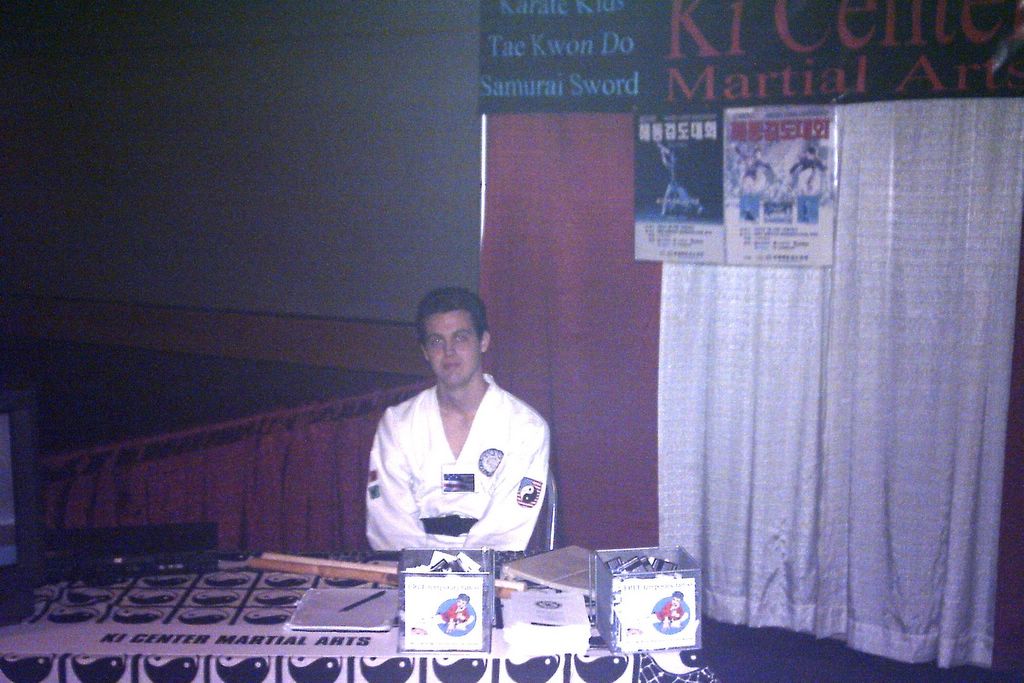
Yesterday morning my wife and I attended the Tucson Home Show at the Convention Center in Tucson. I normally don't go to these shows, but my son, Victor, had volunteered to run the booth for the Ki Center Martial Arts school He has attended this school for many years and has worked his way up to provisional black belt.


Victor got us a couple of free passes, so we got up early and drove him down in time to set up for the 9:30 opening. I was quite surprised at the large crowd that was already there when we arrived.

The show was quite interesting with a large number of vendors present. Given the current housing boom in Tucson, I was surprised to find only one realty company and no home builders other than a couple of small custom ones. There were also only a few mortgage lenders present.

Being Tucson, pool and spa vendors were well represented. Another big group were various home improvement companies, interior design companies and sellers of things like tile, doors and windows, roofing, etc. There were a couple of water softener companies but not the big numbers you would have expected a few years ago – that market must be saturated by now.

There was the usual collection of small home based businesses - people selling their crafts, people who have invested in little home based franchises or multi-level marketing operations, etc. - offering a variety of wares. This segment of the market seems to have matured and established itself because the people in these booths seemed very professional and their businesses seemed to be established and sound. All of them appeared to be serious businesses and not a hobby that pays for itself as many appeared to be in the past.

Among the small, home-based businesses were a number selling skin lotions. The dry climate in Tucson adds to the demand for products like these especially during the winter months when the air is both cooler and dryer. All of them were billed as containing only natural ingredients meaning that that the chemical compounds in them were created by Mother Nature rather than by humans in a lab. In addition to dry skin the products were billed as being helpful in curing psoriases, eczema, acne, burns, skin allergies and a long list of other skin ailments. Two that intrigued me were selling skin products containing emu oil as the main ingredient. Emus are a wingless bird found in Australia. The raising of emus was a hot business in the 1980s. Emu and ostrich enjoyed a wave of popularity at this time mainly as a beef substitute. As I recall, they were economical to raise as they had more meat per pound than cattle and the meat was leaner and lower in cholesterol than beef. Then the importation of ostrich was banned due to a disease which gave the emu an edge. For a while people were making good money by purchasing a couple of hundred dollars or so in a couple of emu eggs which they hatched and raised. They made money by selling the eggs laid by their emu and selling the meat and oils. Emu are supposed to be easy to raise as you just let them run loose in a fenced in area and provide some food. There was some medical research that showed that emu oil showed promise in treating arthritis.

It was interesting to see that emu and ostrich raising had moved from the get rich quick promotion phase in the 1980s to a serious and established industry. I was doing some business counseling at the Small Business Development Center in the early 1990s and had the opportunity once to review a business plan for a person who planned to raise emu. I also used to drive past a home in NW Tucson which had a few emu on an empty lot next to the home. Also, anyone who heads north from Tucson in Interstate 10 will notice the large Rooster Cogburn Ostrich Ranch on the west side of road by exit 219. According to the web site for Laid in Montana Emu Oil Products, the emu oil products vendor whose booth I visited at the Tucson Home Show, emu farms are now well established throughout the nation from the east to the west coast and from the Canadian to the Mexican border.

We had intended to just take a quick look around and leave. However, we ended up spending almost four hours at the show which occupied both the ground floor exhibition hall and a large upstairs ballroom. All in all it was quite interesting and profitable as I came away with reservations to visit four timeshare sales presentations in the next month. Even though I told them that I had just purchased a one week timeshare last month and was not in the market for more at the moment they insisted and dangled sufficient monetary and other vacation packages to make it worthwhile. Not counting a 5 day and 4 night stay in Hawaii, a weekend in Scottsdale, dining certificates and other assorted goodies, I also have been promised a total of $300 in cash and gasoline gift cards.

Thursday, January 05, 2006

More Jobs Despite Outsourcing

While the politicians and mainstream media run around, like Chicken Little, worrying that the sky is falling due to the outflow of jobs and dollars to places like China and India the facts give a different story.

My regular job is managing IT Training and, as a result, I keep an eye on the IT job market in order to know the type of training needed in the market. For the past two or three years I have been flooded with news stories and reports about all the good IT jobs being exported to China and India.

As an economics instructor, I also try to keep up on other economics news and that has been full of tales about how manufacturing jobs, especially in the textile industry, are being lost to China.

It is a fact that thousands of good paying high tech jobs in the IT Industry, formerly done by Americans are now being done by people in China, India and other third world countries. Also, there has been a continuing decline in jobs in old line manufacturing industries as these companies are either moving their operations abroad to countries with lower labor costs or are losing their market share to competition from competitors operating in lower wage foreign countries. But two articles this week shed a different light on this.

First, a blog entry at Mises.org by Mike Shedlock noted
that China, of all places, is LOSING manufacturing jobs. Where are the Chinese jobs being exported to? Nowhere. That's right, job growth in China's manufacturing sector is slowing and, in some cases, actually declining but the jobs lost are not being outsourced to lower wage countries. As China's economy grows, companies in China are starting to face the same pressures that companies in America and other industrialized countries have faced and are still facing. On the one hand competitors in other parts of the global economy are finding ways to manufacture certain products, like textiles, at lower cost than China and this lower cost is passed on to consumers in the form of lower prices. On the other hand, as the Chinese economy grows more jobs are created and companies in China are beginning to encounter labor shortages. When labor, like any resource, is scarce, those that need it begin to bid up the price – in this case wages.

In order to remain competitive, Chinese manufacturers must adapt new technologies and techniques that allow them to maintain or increase production at a lower cost. Like American and other advanced economies, the Chinese are beginning to produce more with less and this translates into lower prices and more goods for all the people. This is the driving force behind the ever rising standard of living that Americans have long enjoyed and the rest of the world is now beginning to enjoy.

The other piece of news comes from a recent survey conducted by Computerworld Magazine about jobs in the IT Industry. According to the survey, less than 5% of the 10 million jobs in the U.S. IT Industry have been outsourced to companies overseas. True, some of these were high paying programming and other technical positions. But, all of these programming jobs and other positions, such as call center personnel, were low end, repetitive type positions. The rapid growth of computers in the past three decades resulted in high demand for programmers which in turn translated into high pay for these positions. The high pay attracted new people into the field and now there are numerous people in foreign countries that can do this work at a fraction of the wage U.S. programmers are being paid.

Does this mean that programmers have no future in the U.S. No! There is a rising demand for programmers with the higher level skills and flexibility needed by U.S. companies. People whose skills are limited to simply writing code probably have very little future, career wise, in the U.S. However, programmers who know how to write in a number of different computer languages and have business knowledge and skills are in high demand as are computer security experts and project managers. In these areas wages are rising and labor is in short supply. In addition to having a broader range of skills, the other critical factor is a willingness to relocate as the jobs and people with the required skill sets are not always located in the same geographic area of the country.

The reality is that the U.S. still faces a labor shortage but it is a shortage of skilled people. The future is great but only for those with the ambition to continue learning new skills and upgrading their existing skills.

Sunday, December 25, 2005

The Birth of Jesus According to St. Luke

Christmas E-Cards

The following is the account of the birth of Jesus as recorded in Chapter 2, versus 1 - 20 of the Gospel of St. Luke. (Source: "The New American Bible, Thomas Nelson Publishers, 1983, pages 1109-1110)


Birth of Jesus. In those days Caesar Augustus published a decree ordering a census of the whole world. This first census took place while Quirinius was governor of Syria. Everyone went to register, each to his own town. And so Joseph went from the town of Nazareth in Galilee to Judea, to David's town of Bethlehm – because he was of the house and lineage of David – to register with Mary, his espoused wife, who was with child.

While they were there the days of her confinement were completed. She gave birth to her first-born son and wrapped him in swaddling clothes and laid him in a manger, because there was no room for them in the place travelers lodged.

The Shepherds. There were shepherds in that region, living in the fields and keeping night watch by turns over their flocks. The angel of the Lord appeared to them as the glory of the Lord shone around them, and they were very much afraid. The angel said to them: "You have nothing to fear! I come to proclaim good news to your – tidings of great joy to be shared by the whole people. This day in David's city a savior has been born to you. The Messiah and Lord. Let this be a sign to you: in a manger you will find an infant wrapped in swaddling clothes." Suddenly, there was with the angel a multitude of the heavenly host, praising God and saying,

"Glory to God in high heaven,
peace on earth to those on whom
his favor rests."


When the angels had returned to heaven, the shepherds said to one another, "Let us go over to Bethlehem and see this event which the Lord has made known to us." They went in haste and found Mary and Joseph, and the baby lying in the manger; once they saw, they understood what had been told them concerning this child. All who heard of it were astonished at the report given them by the shepherds.

Mary treasured all these things and reflected on them in her heart. The shepherds returned, glorifying and praising God for a ll they had heard and seen, in accord with what had been told them.


Saturday, December 24, 2005

T'Was The Night Before Christmas

by Clement Clarke Moore


'Twas the night before Christmas, when all through the house

Not a creature was stirring, not even a mouse;

The stockings were hung by the chimney with care,

In hopes that St. Nicholas soon would be there;

The children were nestled all snug in their beds,

While visions of sugar-plums danced in their heads;

And mamma in her 'kerchief, and I in my cap,

Had just settled down for a long winter's nap,

When out on the lawn there arose such a clatter,

I sprang from the bed to see what was the matter.

Away to the window I flew like a flash,

Tore open the shutters and threw up the sash.

The moon on the breast of the new-fallen snow

Gave the lustre of mid-day to objects below,

When, what to my wondering eyes should appear,

But a miniature sleigh, and eight tiny reindeer,

With a little old driver, so lively and quick,

I knew in a moment it must be St. Nick.

More rapid than eagles his coursers they came,

And he whistled, and shouted, and called them by name;

"Now, Dasher! now, Dancer! now, Prancer and Vixen!

On, Comet! on Cupid! on, Donder and Blitzen!

To the top of the porch! to the top of the wall!

Now dash away! dash away! dash away all!"

As dry leaves that before the wild hurricane fly,

When they meet with an obstacle, mount to the sky,

So up to the house-top the coursers they flew,

With the sleigh full of toys, and St. Nicholas too.

And then, in a twinkling, I heard on the roof

The prancing and pawing of each little hoof.

As I drew in my hand, and was turning around,

Down the chimney St. Nicholas came with a bound.

He was dressed all in fur, from his head to his foot,

And his clothes were all tarnished with ashes and soot;

A bundle of toys he had flung on his back,

And he looked like a peddler just opening his pack.

His eyes -- how they twinkled! his dimples how merry!

His cheeks were like roses, his nose like a cherry!

His droll little mouth was drawn up like a bow,

And the beard of his chin was as white as the snow;

The stump of a pipe he held tight in his teeth,

And the smoke it encircled his head like a wreath;

He had a broad face and a little round belly,

That shook, when he laughed like a bowlful of jelly.

He was chubby and plump, a right jolly old elf,

And I laughed when I saw him, in spite of myself;

A wink of his eye and a twist of his head,

Soon gave me to know I had nothing to dread;

He spoke not a word, but went straight to his work,

And filled all the stockings; then turned with a jerk,

And laying his finger aside of his nose,

And giving a nod, up the chimney he rose;

He sprang to his sleigh, to his team gave a whistle,

And away they all flew like the down of a thistle.

But I heard him exclaim, ere he drove out of sight,

"Happy Christmas to all, and to all a good-night."

Tuesday, December 13, 2005

369th Birthday of the National Guard

Upon signing on to my account at USAA.Com this morning, I was greeted with an announcement that today, December 13th, is the 369th anniversary of the founding of the National Guard.


KC-97 Tanker at Pima Air Museum in Tucson Arizona - This is the type of plane that I flew


With a quick Google search I was able to learn that on December 13, 1636, the Massachusetts Bay Colony organized three regiments of militia to defend the colony against the growing attacks by the neighboring Pequot Indians. The order by the government of the colony required that all males between 16 and 60 years of age own a gun and be ready to defend the community against attacks.

The Pequot War that followed had its origins in the tensions that arose between the Pequots and the colonists as the Pequots found themselves increasingly squeezed as the English colonists of Massachusetts to the east expanded west and the Dutch colonists in New York on their west expanded east. A minor incident between a white trader and a small band of Pequots flared into a major territorial war. Failing to get other tribes to join them, the vastly outnumbered Pequots were soon vanquished and the tribe as an entity disappeared.

Thus began the American tradition of local militia. Nearly a century and a half later, our Founding Fathers maintained the tradition of a dual state and federal military for defense by making provision in the Constitution for the states to continue to maintain their militias. Up until the American Revolution, it was the local militias that defended the frontier against attack and it was the local militia that fought alongside the British army against the French during the French and Indian Wars. George Washington gained fame as a military leader while commanding the Virginia militia in the battle against Ft. Duquesne (site of modern Pittsburgh, Pennsylvania). During the American Revolution it was the militia of the various colonies that provided the bulk of the troops that fought with the Congressionally created Continental Army commanded by George Washington in our fight for Independence from Great Britain. Following the American Revolution the armed forces of the U.S. were small most of the time and on state militia or, nowadays National Guard whenever we were forced to defend our freedom.

So, why did this notice interest me? Well, the reason USAA had the notice of the 369th anniversary of the birth of the National Guard on its website is its members are all current or former military personnel or their families. I joined USAA thirty some years ago when I was a newly minted second lieutenant attending the USAF Institute of Air Navigation at Mather, AFB in Sacramento, California. I had both a federal commission in the Air Force Reserve from Congress and a state commission from the state of Wisconsin in the Wisconsin Air National Guard.

I had been a cadet in the AFROTC during my senior year of college and was supposed to complete my ROTC training in graduate school. But when I accepted a teaching assistantship at the University of Wisconsin in Milwaukee which had Army but not Air Force ROTC I was forced to leave the ROTC program which immediately exposed me to the draft (the Vietnam War was in full force when I graduated in 1969).

I had been in the pilot training program in ROTC and when a fellow graduate student, who had recently left active duty as a navigator with the rank of captain and was then flying with the Air National Guard in Milwaukee, told me that, while they had a waiting list of people for enlisted, officer and pilot positions, the Air National Guard in Milwaukee short on navigators.

Pilots were the elite in the Air Force and they looked down upon navigators as mere map readers (we, of course, considered navigators to be the brains of the crew and the pilots mere monkeys who steered the plan in the direction we told them – but it was all in fun as we worked as a team in the air). Not being interested in a career in either aviation or the military and considering that my alternatives consisted of either spending the next couple of years navigating part time for the Air National Guard or finding myself ankle deep in mud as an infantryman in Vietnam, I chose to become a navigator.

I did my required military service with the 128th Air Refueling Group of the Wisconsin Air National Guard based at Mitchell Field (the Milwaukee Airport) in Milwaukee, Wisconsin. I had a good time and made a number of training flights to Florida and Germany navigating a Korean War vintage KC-97 tanker doing air refueling for fighter jets. I was fortunate to serve stateside and in Europe and my only encounter with the "enemy" occurred over international waters enroute to Iceland from Germany when we came out of a cloud bank at 30,000 feet flying in a northwest direction toward Keflavik AFB in Iceland. At the same time two Russian bear class bombers, enroute from Havana to Murmansk, came out of the same cloud bank heading northeast toward their base in Murmansk. Fortunately, they were about 500 feet below us so we avoided a collision. This was during the Cold War so neither of us bothered to tell the other where we planned to fly in international airspace. I am sure they were as surprised as we were but probably not as mad as we were. We were both being tracked by the nearby ground control at Keflavik which did not bother to alert us to the presence of the Russian bombers. After berating the person manning the tracking radar at Keflavik, from both the air and later on the ground, with language I will not print here, our pilot was given the lame excuse that the controller knew we were on a horizontal collision course but assumed we were separated vertically by a few thousand rather than a few hundred feet.

That is my link to the tradition and organization (like the Air Force which evolved out of the Army, the Air National Guard evolved from the Army National Guard) that is celebrating its 369th birthday today. My nephew, Sergeant James Nugent,who returned from a year's tour of duty in Iraq with the Wisconsin Army National Guard last month, is also a part of this tradition going back to 1636.

Links for Further Reading:

Founding of the National Guard

How to Become a Fighter Pilot With The Air National Guard